Canadian Academy of Health Sciences (CAHS) has named Prof. Frank W. Stahnisch of University of Calgary among its newest fellows!
Click here to view the link.
Congratulations, Prof. Stahnisch!

Aug 31 2026
Feb 25 2026
We are pleased to announce that the Alexander von Humboldt Foundation has appointed Prof. Dr. Matthias Fritsch (Concordia University) as Humboldt Ambassador Scientist in Canada for the period January 1, 2026, to December 31, 2028.
Professor Fritsch studied philosophy, literature, and linguistics in Cologne, New York, Berlin, and Philadelphia before joining Concordia University in Montréal in 2002. He has been a Humboldt Fellow at Goethe University Frankfurt, a Visiting Research Professor at Kyoto University, and continues to serve as Senior Research Fellow at Western Sydney University. In 2017 he also won the Humboldt Alumni Award for the best network initiative for his ‘Nature Time Responsibility’ initiative.
Ambassador Scientists disseminate information about Germany as a research location at universities and research institutions at home and abroad, focussing particularly on the Foundation’s sponsorship programmes and international network. They work for the Foundation in an honorary capacity as alumni, hosts or reviewers.
Congratulations, Prof. Dr. Matthias Fritsch!
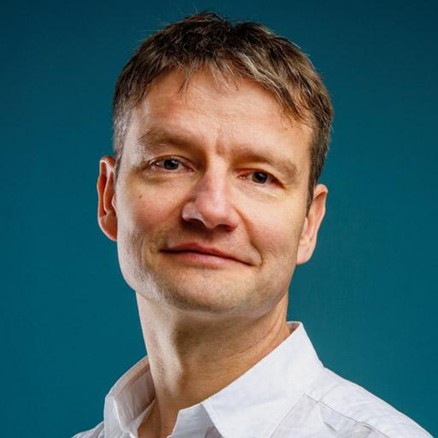
Nous sommes heureux d’annoncer que la Fondation Alexander von Humboldt a nommé le professeur Matthias Fritsch (Université Concordia) ambassadeur scientifique Humboldt au Canada pour la période allant du 1er janvier 2026 au 31 décembre 2028.
Le professeur Fritsch a étudié la philosophie, la littérature et la linguistique à Cologne, New York, Berlin et Philadelphie avant de rejoindre l’Université Concordia à Montréal en 2002. Il a été boursier Humboldt à l’Université Goethe de Francfort, professeur invité à l’Université de Kyoto et continue d’exercer les fonctions de chercheur principal à l’Université Western Sydney. En 2017, il a également remporté le prix Humboldt Alumni Award pour la meilleure initiative de réseau pour son initiative « Nature Time Responsibility ».
Les ambassadeurs scientifiques diffusent des informations sur l’Allemagne en tant que lieu de recherche dans les universités et les instituts de recherche en Allemagne et à l’étranger, en mettant particulièrement l’accent sur les programmes de parrainage et le réseau international de la Fondation. Ils travaillent pour la Fondation à titre honorifique en tant qu’anciens élèves, hôtes ou évaluateurs.
Aug 07 2025
Jun 03 2025
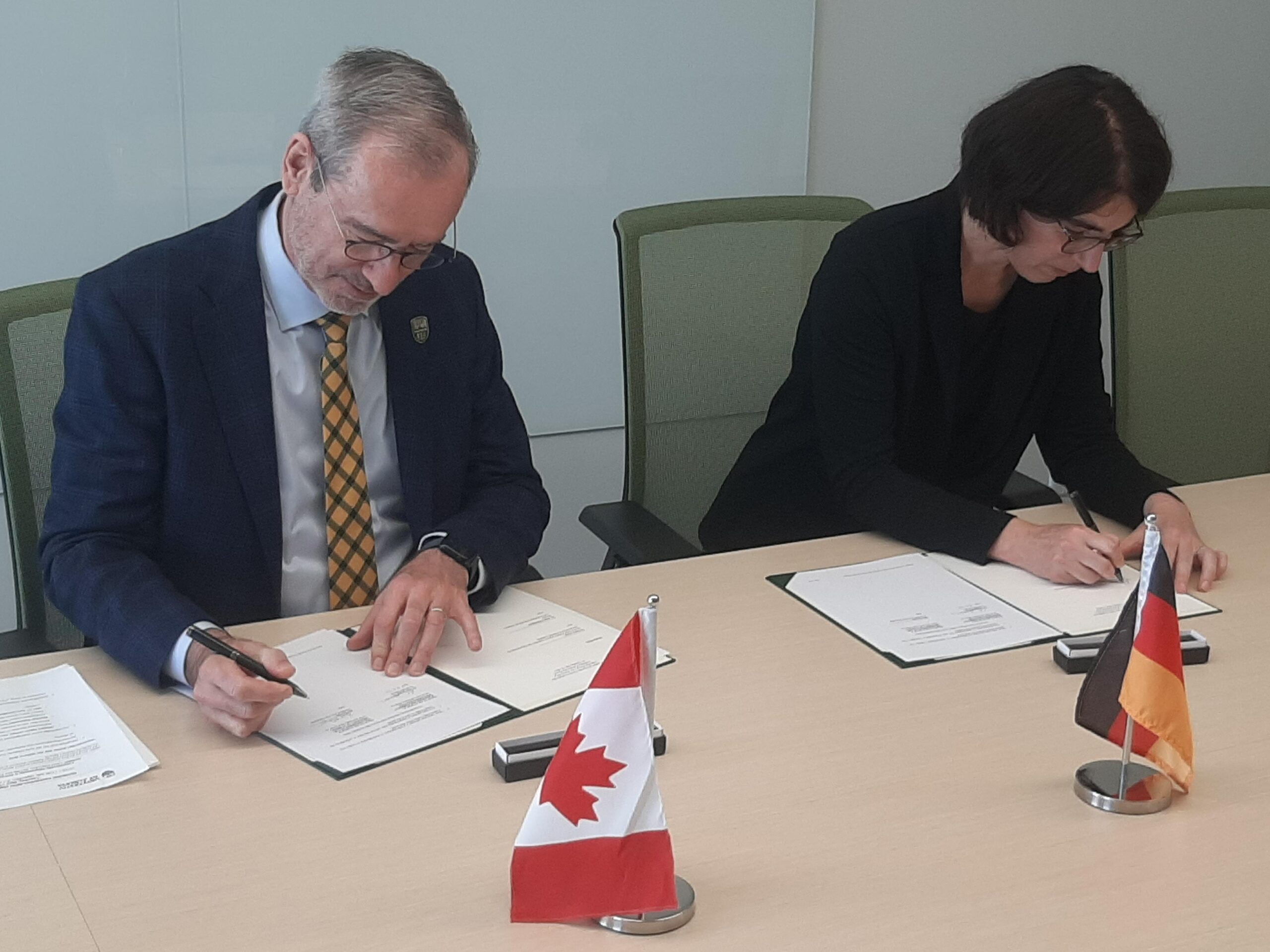
On May 13, the Alexander von Humboldt (AvH) Foundation and the University of Alberta (UAlberta) renewed their Memorandum of Understanding (MoU), reaffirming their commitment to academic collaboration through the Humboldt Foundation Liaison Office in Canada (HFLOC).
Hosted at UAlberta, HFLOC serves as a vital link between Canadian scholars and the funding opportunities offered by the AvH Foundation. The office places a strong emphasis on supporting individual researchers, and many alumni describe their Humboldt experience as transformative and life-changing.
Originally established in 2006, HFLOC is jointly funded by the AvH Foundation and UAlberta. Its work in promoting international research opportunities is actively supported by Humboldt alumni across Canada, who frequently participate in information sessions and mentorship of early-career researchers.
The current renewed MoU was first signed in Bonn by Dr. Markus Zanner, the newly appointed Secretary General of the AvH Foundation, and later signed at the University of Alberta by President Bill Flanagan. The signing ceremony was witnessed by Dr. Katrin Amian (AvH Foundation) and Dr. Dietmar Kennepohl (HFLOC).
This renewed agreement sets the stage for the continued strengthening of academic and research cooperation between Canada and Germany through HFLOC.

03 juin 2025
Le 13 mai 2025, la Fondation Alexander von Humboldt (AvH) et l’Université de l’Alberta (UAlberta) ont renouvelé leur protocole d’accord (MoU), réaffirmant leur engagement en faveur de la collaboration universitaire par l’intermédiaire du Bureau de liaison de la Fondation Humboldt au Canada (HFLOC).
Hébergé à l’Université de l’Alberta, le HFLOC sert de lien essentiel entre les chercheurs canadiens et les possibilités de financement offertes par la Fondation AvH. Le bureau met fortement l’accent sur le soutien aux chercheurs individuels, et de nombreux anciens étudiants décrivent leur expérience Humboldt comme transformatrice et bouleversante.
Créé en 2006, le HFLOC est financé conjointement par la Fondation AvH et l’Université de l’Alberta. Son travail de promotion des opportunités de recherche internationales est activement soutenu par les anciens boursiers Humboldt à travers le Canada, qui participent fréquemment à des séances d’information et au mentorat de chercheurs en début de carrière.
Le protocole d’accord renouvelé a d’abord été signé à Bonn par le Dr Markus Zanner, nouveau secrétaire général de la Fondation AvH, puis à l’Université de l’Alberta par le président Bill Flanagan. La cérémonie de signature s’est déroulée en présence du Dr Katrin Amian (Fondation AvH) et du Dr Dietmar Kennepohl (HFLOC).
Cet accord renouvelé ouvre la voie à la poursuite du renforcement de la coopération universitaire et scientifique entre le Canada et l’Allemagne par l’intermédiaire du HFLOC.
Jun 03 2025
Marie-Josée Fortin from the University of Toronto is the Humboldt Foundation’s Konrad Adenauer Research Award winner for 2025. The press excerpt is here.
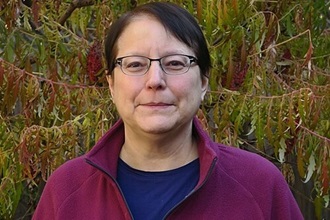
Marie-Josée Fortin is a leading researcher in spatial ecology – the discipline that addresses the investigation and modelling of spatial structures in relation to ecological processes, biological diversity and ecosystem services. Fortin holds the Canadian research chair in spatial ecology at the University of Toronto’s Department of Ecology and Evolutionary Biology. Prof. Fortin’s webpage is here.
Congratulations, Prof. Fortin!
May 29 2024
The Humboldt Foundation’s Konrad Adenauer Research Award winner for 2024 is Prof. Mark Jellenik, a Canadian geophysicist from University of British Columbia and a leading representative for Earth system science. The press excerpt is here.
Prof. Jellenik has been a full professor of the Earth, Ocean and Atmospheric Science department since 2013. He explores magmatic and volcanic processes and hazards, geodynamics, long-term climate change, surface processes and the development of the Earth and other rocky planets. Prof. Jellenik’ webpage is here.
Congratulations, Prof. Jellenik!
Dec 05 2023
The Konrad Adenauer Research Award is conferred annually by the Alexander von Humboldt Foundation. It recognises the entire academic record to date of an internationally renowned Canadian researcher. The prize is funded by the German Federal Foreign Office and aims to promote academic and cultural exchange between the Federal Republic of Germany and Canada.
The award honors researchers from Canada whose fundamental discoveries, new theories, or insights have had a significant impact on their own discipline and beyond, whose personality and research contribute to the academic and cultural exchange between the Federal Republic of Germany and Canada, and who are expected to continue producing cutting-edge academic achievements in the future.
Nominations for the prize must be filed as nominations for a Humboldt Research Award. Researchers in any discipline may be nominated. The Alexander von Humboldt Foundation particularly encourages the nomination of qualified female candidates. The award totals EUR 60,000. In addition, prize winners are invited to conduct a research project of their own choosing in Germany in close collaboration with a specialist colleague. The duration of the research stay of six to twelve months may be divided flexibly into several segments. Supplementary expenditures associated with an invitation to stay in Germany to conduct research (e.g. travel or language courses) are also covered.
The nomination of candidates for the prize must be initiated by established researchers in Germany. For further information, please refer to the relevant guidelines and provisions for the nomination and selection procedure in the Humboldt Research Award Programme. One Konrad Adenauer Research Award will be granted annually to a researcher from Canada who was nominated successfully for a Humboldt Research Award.
Open Deadline: Nominations can be initiated any time!
For further information, please refer to the website of the Alexander von Humboldt
Foundation: http://www.humboldt-foundation.de/web/adenauer-award.html.
Inquiries about the award may be addressed to info@avh.de.
May 15 2023
The Alexander von Humboldt Foundation has a new president – Prof. Robert Schloegl. A chemist and an expert of energy systems, Prof. Schloegl emphasised at the Berlin-Brandenburg Academy of Sciences and Humanities that the Humboldt Network plays an important role as a driver of innovation and a bridge-builder across cultures and nations. Please read the full news here.
May 15 2023
The Humboldt Foundation’s Konrad Adenauer Research Award winner for 2023 is Prof. Jennifer Evans from Carlton University, Ottawa. The press excerpt is here.
Prof. Evans has been a Full Professor at Carleton University in Ottawa since 2017. She examines the relationships between queer and transgender persons, the state and societal notions of community, on the basis of cultural and social theories. Prof. Evans’ webpage is here.
Congratulations, Prof. Evans!
Jun 17 2022
